 |
|
CFFA for Apple II
-
Info








Order

Support



Project: CFFA for Apple II, II+, IIe, IIe enh, IIgs
Project Status:
06/19/21:
Big News!!!🎉 The CFFA3000 is back!!
It is being produced under license by Henry Courbis of ReActiveMicro.com. He has started taking orders and should be shipping in a few weeks.
You can learn more here.
02/19/20:
I only have about 17 non-functional CFFA3000 units left. I have sold most of the units that were easy to fix on ebay already. If I can fix any of these remaining units, I usually list them on Sunday evenings (US central time zone) for a auction duration of 7 days. I should be able to fix a few more, but most will likely never be repaired.
Here are a couple videos about the CFFA3000:
1) A high level introduction what the CFFA3000 does.

2) An initial setup tutorial for getting started.
|
Project Introduction:This page describes a project to create a CompactFlash / USB-Flash Interface card for Apple II computers (][+, //e, //e enh or //gs) that started back in 2002. Over the years I have build about 5000 CFFA cards in 11 batches. The card is in its third generation which dropped the IDE support and added USB flash storage support. It also supports FAT16 and FAT32 formatted devices for easier transfer to/from your PC. I did the original wire-wrap prototype over the span of several months. This project is very much a case of old technology (the Apple II computer) meets new (CompactFlash cards and Altera CPLDs). My reasoning for this project is described in detail in the Background section, but suffice it to say, I wanted to be able to pull out my old Apple II and use it from time to time to reminisce about the early days of personal computers. I wanted a reliable way to store my Apple II programs and data files for many years to come. Due to the long term reliability prospects of floppy drives, and my general laziness, I decided a mass storage device is what I needed.
CFFA3000 project Introduction:At the end of 2008 I sold out of my 6th run of CFFA cards. Instead of making another batch to meet demand, I decided it was time to design something new. The main shortcoming of the CFFA card was its lack of support for operating systems other than ProDOS. It was not possible to store and run DOS 3.3 games from the CFFA. So I decided to try desiging a new CFFA that would have these new features: 1) Floppy disk emulation at the nibble level and 2) USB flash drive support for storage of .dsk image files. The effort to design a new CFFA now called the CFFA3000 took about 2 years. The long development time was mainly because this is a hobby for me and not my normal job, also the CFFA3000 is about twice as complex as the orginal CFFA.
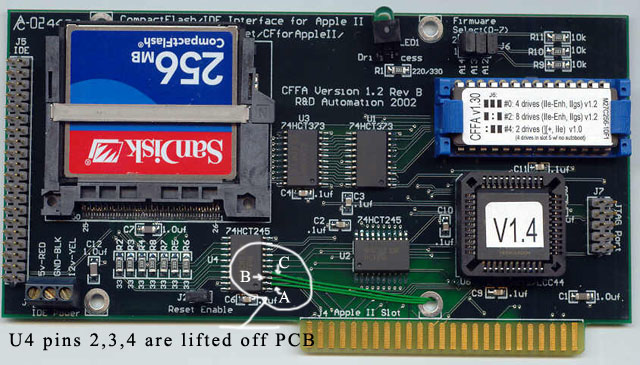
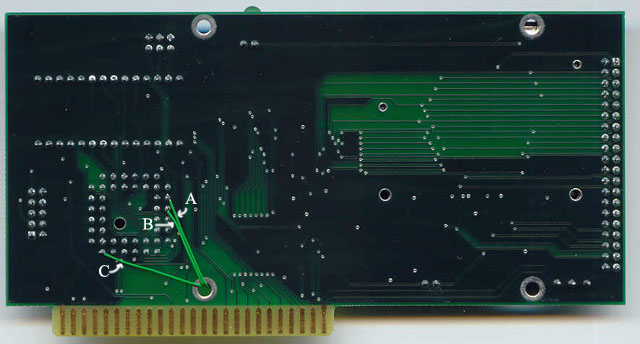
Looking for the CFFA1 for Apple1 Project? Click Here!Great tool for CFFA users:All CFFA owners who use Windows... Andy McFadden has come out with an excellent tool called: CiderPress. This tool will allow you to read and write your CFFA formatted CF cards right on your PC. It will make an excellent backup tool. Check it out at Andy's Site Information about the "3 jumper" fix for older CFFA V1.2 cards: (Runs 1, 2, and 3) A problem as been found that explains why many CompactFlash cards have never worked with the older CFFA cards. I was motivated to find this problem when I realized that SanDisk 256MB cards were not working properly. To summarize, the address lines were changing near the end of the ATA bus cycle seen by the CF card. This seemed to be tolerated by the smaller SanDisk cards, but not the 256MB card or many other brands, like Lexar. So after much debugging I found the problem and was able to fix the problem with a new release of the CPLD logic (V1.4), and the addition of 3 "rework" jumper wires to the board. Click here to see the front of the board, and here to the back. |
|
| Printer Friendly Version | R & D Automation © 2003 - 2024 | |||||||||